
Nonprofits Are Our Community. Not Just Business.
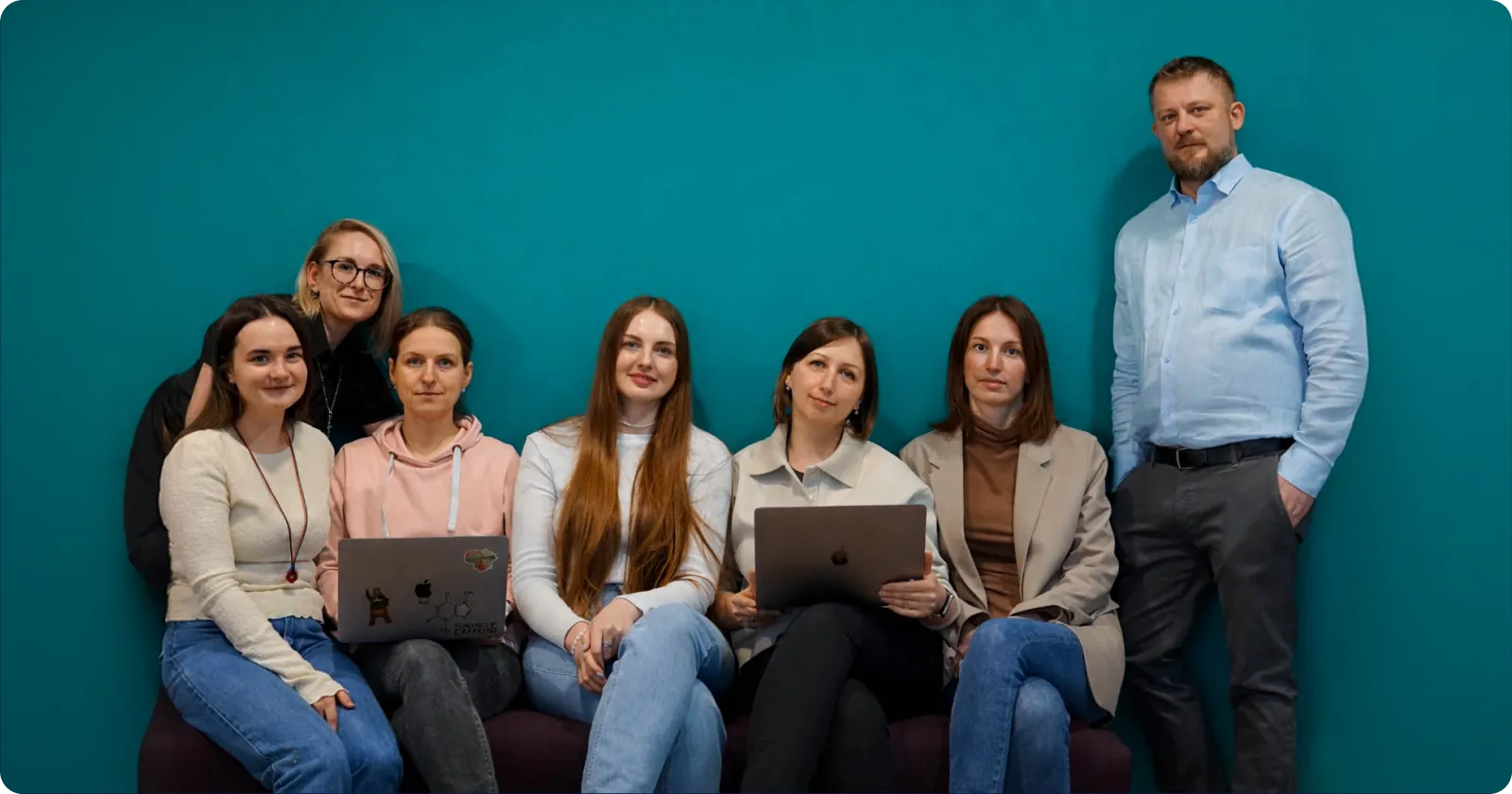
Nonprofits are often treated as a segment in this industry: a budget tier, a set of feature requests, a discount code. We treat them as people we work alongside, through pro bono projects, inclusion initiatives, and partnerships like the one we run with the Blind Institute of Technology (BIT), which helps people with disabilities build careers in Salesforce.
That relationship shapes how we build.
Nonprofit teams are small. Expectations on them are not. They run programs, chase donors, coordinate volunteers, prove impact, usually without an IT department to lean on. So technology has to earn its keep. A nonprofit CRM should cut administrative work, not add a system to babysit. Automation should kill repetitive tasks. Data should drive decisions, not demand hours of manual reporting.
"The best solution isn't the one with the most features. It's the one that gives an organization back its time."
Real Organizations, Real Constraints
Caritas Lithuania
Caritas Lithuania came to us with program data scattered across spreadsheets, reporting done by hand, and almost no visibility into volunteer or donor activity. We built out Salesforce NPSP with the Program Management Module and automated the connections between programs, beneficiaries, volunteers, and donors.
ResultManual reporting dropped 60%. Teams got real-time visibility into their own programs. Donor and volunteer communication became automated and personal instead of ad hoc.
Community360
Community360 came to us with fundraising and operational data spread across spreadsheets, bespoke databases, and several other systems. Manual work, fragmented data, and inconsistent processes made it difficult to get a complete view of donors, donations and funding activity. We built the foundation for a unified Salesforce Nonprofit Cloud platform, starting with Fundraising as the highest-priority area. The solution brings constituent management, donations, campaigns, allocation, reporting, and automation into one place, with a phased approach designed around Community360's limited resources and budget.
ResultA scalable CRM foundation for centralizing fundraising data, reducing manual work, and improving reporting and visibility, with the next phase set to expand fundraising capabilities, automate key workflows, and integrate Salesforce with the systems Community360 already relies on.
Vaikų Linija
Vaikų Linija came to us looking to streamline fundraising, donor management, and case-handling processes while reducing the manual work that takes time away from its mission, including its Trusted Flagger work. We proposed a unified Salesforce Nonprofit Cloud platform, starting with a Fundraising CRM foundation and expanding into donation management, integrations, analytics, and Trusted Flagger case management, connecting donor and donation data, automating communications and follow-ups, and bringing website reports, case tracking, and resolution into one structured process.
ResultA scalable CRM foundation built to reduce manual work, improve donor visibility, and make fundraising performance easier to track, with room to grow into volunteer management and advanced marketing as the organization scales.
Take My Hand
Take My Hand came to us looking to streamline fundraising, donor management, and program processes while reducing the manual work carried by a small, resource-constrained team. Information about donors, children, sponsors, mentors, payments, and program activities was spread across Excel files, emails, and messaging platforms, making payment reconciliation, follow-ups, reporting, and day-to-day coordination harder as the organization grew. We proposed a centralized Salesforce Nonprofit Cloud platform, starting with a Core Fundraising CRM foundation that brings together donor and donation data, donation lifecycle and pipeline management, user roles and permissions, campaign management, and automated communications, alongside the ability to import and process donation data from multiple sources, including Betterplace, Postbank, Stadtsparkasse München, and PayPal.
ResultTake My Hand is building a scalable CRM foundation that replaces fragmented, manual processes with a centralized, transparent way of working, with the first phase focused on fundraising and financial data and room to expand into program and beneficiary management, sponsor and mentor matching, and more advanced reporting as the organization grows.
Different missions, different symptoms. Same root cause: too many disconnected processes, too little visibility. That's the pattern we look for before we look at any platform.
Give Back Is Not Just a Phrase for Us
Our commitment to the nonprofit sector doesn't stop when a project ships. It's built into how we operate as a company, year-round.
Our partnership with the Blind Institute of Technology (BIT) is a good example. We help organize Salesforce training programs for people with disabilities, giving them a real path into the ecosystem. But we don't see our part as done once someone graduates the course. We stay involved: helping students land internships, opening doors, and pushing for real placements rather than a certificate and a goodbye. Two graduates of the program are now full members of our own team: Tarja Paabo and Andrius Abartis both came through BIT and are now working at ITG.
The same philosophy carries into how we treat the organizations we implement for. Our work with Caritas Lithuania didn't end at go-live. We continue to provide them with free support after implementation, because a CRM that's left to fend for itself stops being useful fast, and a nonprofit team shouldn't have to absorb that risk alone.
We also take on projects fully or partially pro bono, on top of paid client work. Each year, we open our own ITG volunteering program dedicated to supporting nonprofit organizations. As part of this initiative, we provide services either fully or partially pro bono, investing our time and expertise to help nonprofit teams strengthen their operations and make greater use of technology. A handful of new organizations join the program every year, and each one is a chance to open up what Salesforce can do for a team that couldn't otherwise access it. This work reflects our ongoing commitment to supporting and giving back to the nonprofit community.
The Real Problem Isn't Choosing a CRM
Ask "which CRM should we pick?" and you're asking the wrong first question. The right one is: what needs fixing before a CRM shows up?
Nonprofit tech stacks rarely get designed, they accumulate. A donor spreadsheet here, a volunteer tracker there, program data in a third tool, communication history buried in someone's inbox. Each fix was reasonable at the moment. Together they become a mess: fragmented data, duplicate records, manual reporting, no single source of truth.
Staff spend their days hunting for information instead of using it. Leaders make calls without seeing the full picture. A CRM can fix a lot of this, but only if it lands on solid ground. It can't repair a broken process by itself. It can only give a good process room to run.
So we start with the organization, not the software: How does the team actually work? Where does information get lost? Where does manual effort pile up? Which systems genuinely need to talk to each other?
Understand first. Structure second. Automate third.
Making Salesforce Fit the Nonprofit: Not the Reverse
Once we know how an organization actually operates, the platform becomes a tool instead of a project. Salesforce Nonprofit Cloud, NPSP, automation, integrations, reporting: which pieces matter depends entirely on what the organization needs, not what's available.
Donor data and campaign activity shouldn't live in separate spreadsheets. Recurring reports don't need a human generating them by hand. Systems that run daily operations shouldn't require someone manually copying data between them.
Implementation, then, is less about configuring software and more about a sequence of decisions: how data is structured, what integrates with what, who owns which role, what gets automated, what gets measured, and just as importantly, what doesn't need to be built at all. A lean system a small team can actually run beats a powerful one they can't.
The platform lays the foundation. Process determines how it gets used. People need to trust and understand the system. And impact, not adoption, not features, is the only metric that actually counts.
Programs like Power of Us, which provides eligible nonprofits with 10 free licenses, and the broader Salesforce.org ecosystem make the platform more accessible to eligible nonprofit organizations. But access is the starting line, not the finish. The real work is using it deliberately, not to make a nonprofit look like an enterprise, but to give a small team the structure and visibility to do more with what it already has.
Simplify → Structure → Connect → Automate → Measure Impact
Five things hold true across almost every nonprofit project we've run:
Simplicity beats sophistication.
Every extra workflow or customization has to earn its place. Limited resources make complexity expensive.
The mission comes first.
A CRM should bend to how the organization works, not the other way around.
Data only matters if people use it.
More data isn't the goal; findable, trustworthy data is.
Automation speeds up what already works, and speeds up what's broken, too.
Fix the process before you automate it.
Adoption isn't success.
The only real measure is whether the team spends less time on admin and more time on mission.
These aren't abstractions. They're the same five questions we ask any nonprofit sizing up a technology partner:
Sometimes the answer is automation. Sometimes it's better data hygiene. Sometimes the right first move is simplifying a process before touching any software at all. A good partner is willing to tell you which.
We Don't Work With Nonprofits Because They Need Salesforce
We work with them because we understand what they need Salesforce to do, and that's a different question entirely.
If your team is losing time to systems that don't talk to each other, or reporting that shouldn't take hours, we can help you find where the time is going.